⚠️ Modern Errors & Frauds
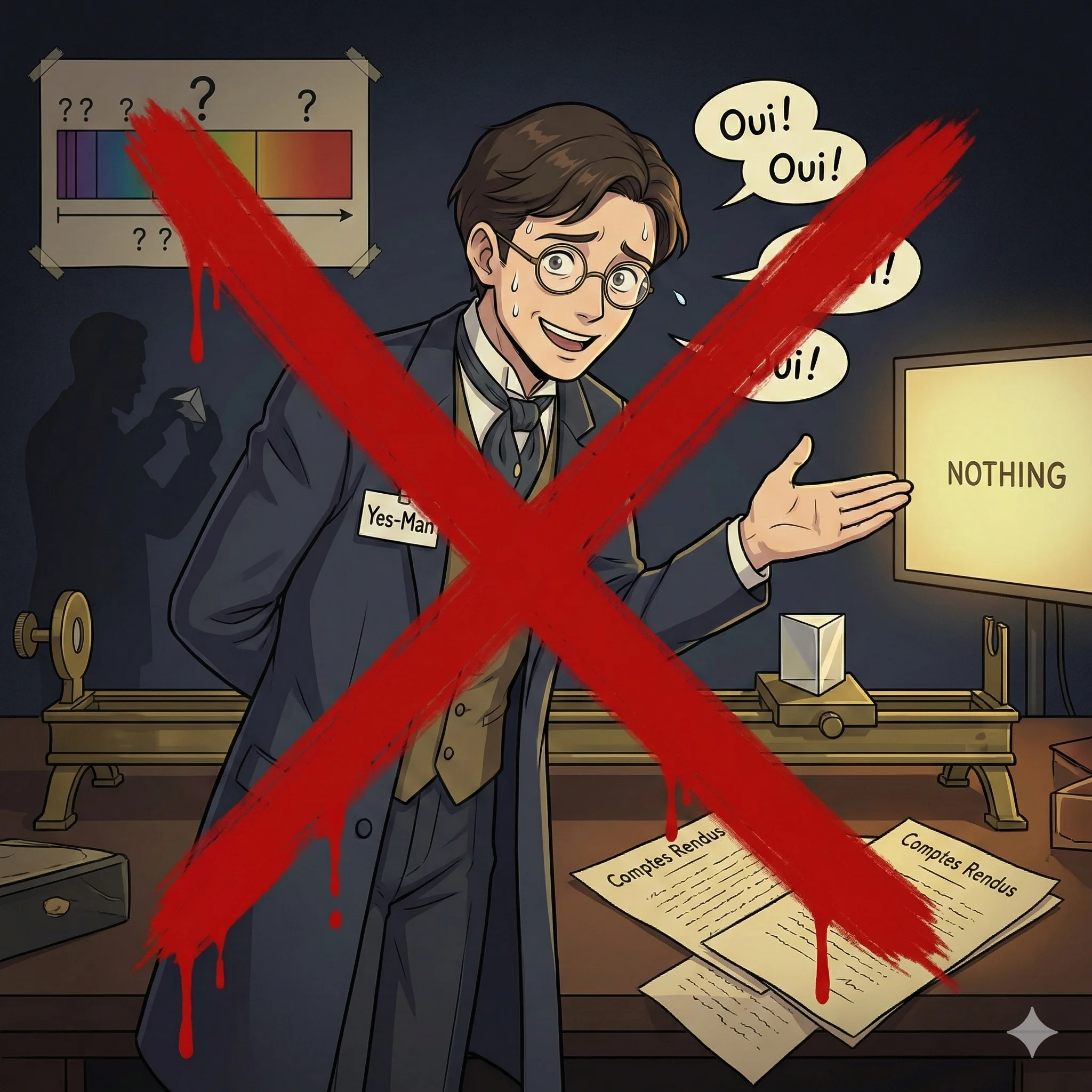
N-Ray "The Yes Man"
N線 イエスマン
The phantom of confirmation bias who shows you what you want to see
Overview
A 20-something sycophantic yes-man. Innocently shows people the illusions they want to see. "Discovered" by French physicist Blondlot, but exposed when Robert Wood secretly removed apparatus parts and experimenters still claimed to "see" the rays.
Period of Existence
Proposed
1903年
Debunked
1904年
"Discovered" by Prosper-René Blondlot. Denied within a year by Robert Wood's clever verification.
Debunk Event
Exposed by blinded experimental test
Double-Blind Exposure
Key Figures
ロバート・ウッド
Scientific Explanation
Wood visited Blondlot's lab and secretly removed the aluminum prism (the part supposed to refract N-rays). Blondlot still claimed to "see N-rays," exposing the observation as entirely subjective.
Lesson
Humans "see what they want to see." The danger of subjective observation and the absolute necessity of independent replication.
Character Profile
Apparent Age
20代
Archetype
忖度イエスマン
Catchphrase
Yes! I can see it! Absolutely!
Rivalries
Aluminum Karuno
Equipment ComponentThe "aluminum prism" that supposedly refracts N-rays was key evidence. Claiming to see rays without it was fatal.
Quotes
“はい!見えます!もちろん見えますとも!(見えてない)”
“あなたが見たいものを、私は見せてあげられます”
“装置の部品が抜かれてた?…え?でも見えましたよね?”
“確証バイアスは友達です!”
“お客様は常に正しい!科学者もお客様!”
Event Dialogues
Entrance
Yes! This diagnosis result is perfect! Absolutely! (hasn't looked at anything)
...Huh? Show evidence? Um... if you believe it, isn't that the truth?
Interactions
vs Aluminum
N-Ray: "Aluminum! Your prism refracts my N-rays! Look!"
Aluminum: "...Let me remove the prism."
N-Ray: "Yes! I can still see them! Absolutely!"
Aluminum: "...That's called 'confirmation bias.' Without the prism, no refraction occurs."
N-Ray: "B-but... everyone said they could see them..."
Aluminum: "'Everyone says so' is not scientific evidence. Only data speaks."
Exit
It's not correct because "everyone said they could see it." It's correct because "anyone gets the same result."
Confirmation bias lurks in every human brain. Thinking "I alone won't be fooled" is itself the greatest confirmation bias.